
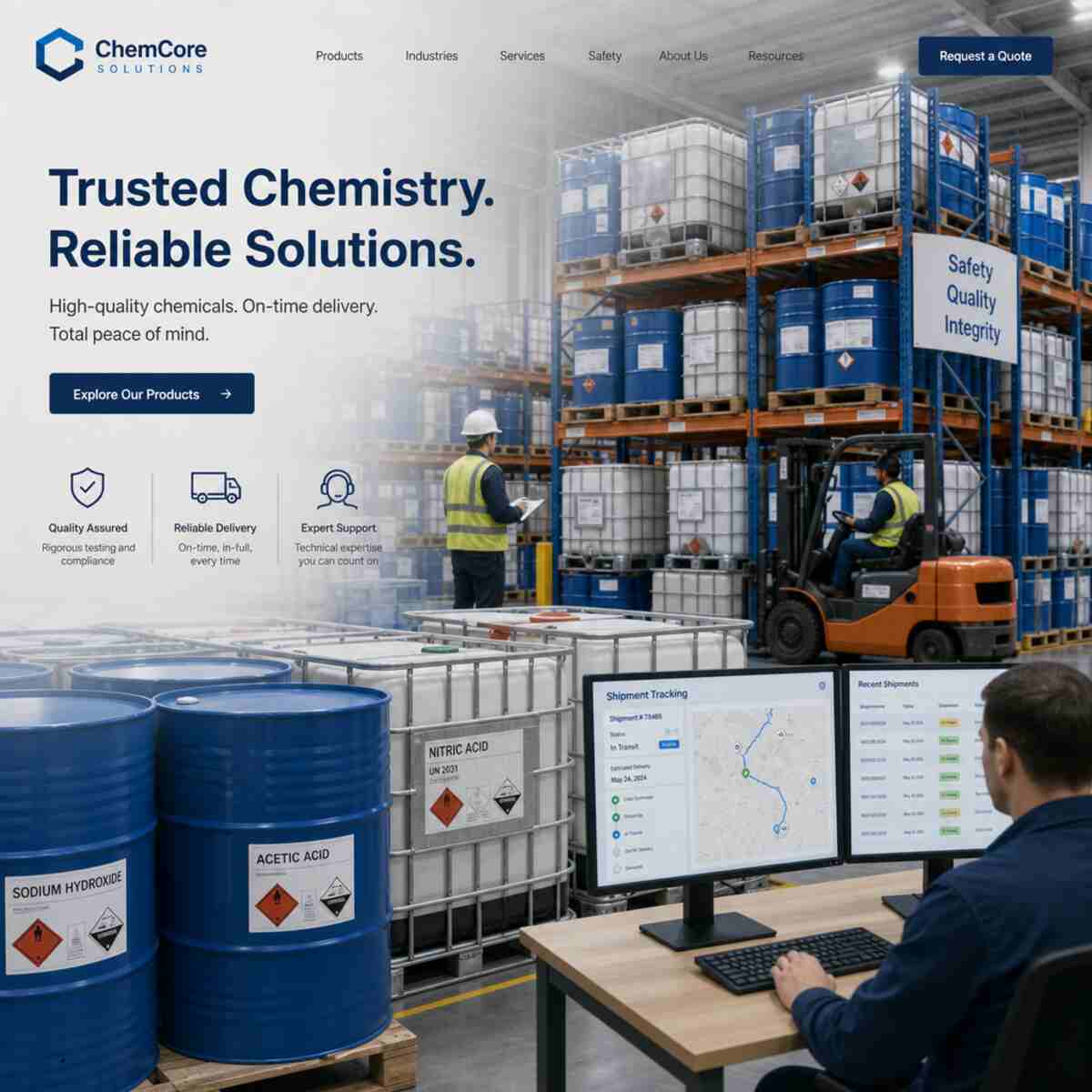

Industrial chemical supply is changing fast, and B2B buyers need more than a vendor with products on a shelf. Procurement, operations, and EHS teams need an industrial chemical supplier that helps them source reliably, document clearly, manage risk, and adapt when the market shifts. This homepage is built to help US buyers understand the big trends shaping chemical supply chains and see how the right supplier can support day-to-day purchasing, plant continuity, safety, and compliance. Find the best chemical supply from China.
What do B2B chemical buyers need right now?
B2B chemical buyers need dependable supply, clear documentation, practical compliance support, and flexible options when demand changes. Procurement teams are watching cost, lead time, supplier risk, and contract terms. Operations teams are focused on keeping production running without overstocking or running short. EHS professionals need accurate SDS access, safe handling information, regulatory awareness, and suppliers who treat quality and safety as daily habits, not afterthoughts.
That is the simple answer. The fuller answer is this: chemical purchasing is no longer just about placing an order and waiting for delivery. Current industry outlooks point to a market shaped by supply chain resilience, tariff and trade uncertainty, digital tools, sustainability expectations, and shifting demand between commodity and specialty chemicals. Chemical companies are also working through overcapacity, margin pressure, regional investment decisions, and the need for stronger supplier qualification.
For buyers, this means the supplier relationship matters. A strong partner helps you ask better questions before a purchase, compare product options with less guesswork, and build a sourcing plan that fits your real operating environment. That may mean stocking commonly used materials, helping locate alternatives, coordinating with chemical manufacturers, supporting documentation requests, or giving your team a clearer path when timelines tighten.
Start with the goal: if you are sourcing industrial chemicals for a US facility, your supplier should make buying easier, safer, and more predictable.
Industrial chemical supply built around reliability
A useful industrial chemical supplier does not simply move containers from one place to another. The real value is in coordination. That includes understanding product requirements, communicating lead times, helping buyers navigate available grades and package sizes, and keeping documentation organized so internal teams can move with confidence.
For procurement, reliability looks like responsive quoting, clear availability, and consistent communication. For operations, it looks like fewer surprises, practical packaging choices, and order timing that supports production schedules. For EHS, it looks like safety data sheets, labeling support, compliance-minded processes, and a supplier culture that respects chemical handling from inquiry through delivery.
Our value proposition is straightforward: we help US B2B buyers source industrial chemicals with dependable supply support, quality-focused handling, safety-aware communication, and compliance-ready documentation. That is the foundation. The details come from how each order is managed, how each request is reviewed, and how each customer’s operating needs are understood.
Core capabilities for chemical buyers
- Industrial chemical sourcing: Support for commodity and specialty chemical needs across common industrial applications.
- Supplier coordination: Communication with chemical manufacturers and other supply partners to help align availability, documentation, and order timing.
- Order and logistics support: Practical help with packaging, shipment planning, and delivery coordination based on product and location requirements.
- Documentation support: Access to product information, SDS materials when available, lot or quality documents when supplied, and other records needed for internal review.
- Inventory planning conversations: Guidance for buyers who need to balance working capital, production continuity, and changing demand.
- Safety and compliance awareness: A careful approach to chemical handling, labeling, communication, and regulatory considerations.
- Responsive customer service: Clear next steps from quote request to fulfillment, with direct communication when details need to be confirmed.
This is not about making purchasing sound complicated. It is about removing confusion before it creates delays. When your supplier helps clarify product, package, timing, and documentation needs early, your team spends less time chasing answers later.
Trends shaping industrial chemical supply chains
Industrial chemical supply chains are being rebuilt around resilience. That word gets used a lot, so let’s make it plain. Resilience means a buyer is not depending on one fragile path, one unclear source, or one last-minute order pattern. It means the supply plan can absorb delays, demand swings, compliance questions, and market noise without throwing the whole operation into panic.
Industry analysts continue to highlight resilience, digital transformation, regional sourcing, sustainability, and AI-enabled supply chain visibility as major chemical sector priorities. KPMG describes oil, gas, and chemical supply chains as moving from incremental improvement toward broader transformation, while Deloitte’s chemical outlook connects supply chain resilience with trade shifts, tariffs, and long-term investment choices.
Here are the trends that matter most for procurement, operations, and EHS teams.
Resilience and risk planning
Chemical buyers are paying closer attention to supplier reliability, transportation risk, lead time variation, and the possibility of disruption. A low price can quickly become expensive if the product is late, unavailable, poorly documented, or difficult to substitute. Resilience means looking beyond the purchase order and asking, “What happens if this route, product, supplier, or timeline changes?”
Practical resilience can include approved alternates, better forecasting, supplier diversification, and earlier communication with chemical distributors. It can also mean identifying which materials are truly critical to production and which items can be purchased more flexibly. This is where a supplier can add value by helping separate urgent risk from normal purchasing noise.
Reshoring and nearshoring
Reshoring and nearshoring are reshaping sourcing conversations. The basic idea is simple: companies want supply chains closer to their plants, customers, or major markets when it makes sense. This can reduce some exposure to international shipping delays, geopolitical uncertainty, and long replenishment cycles.
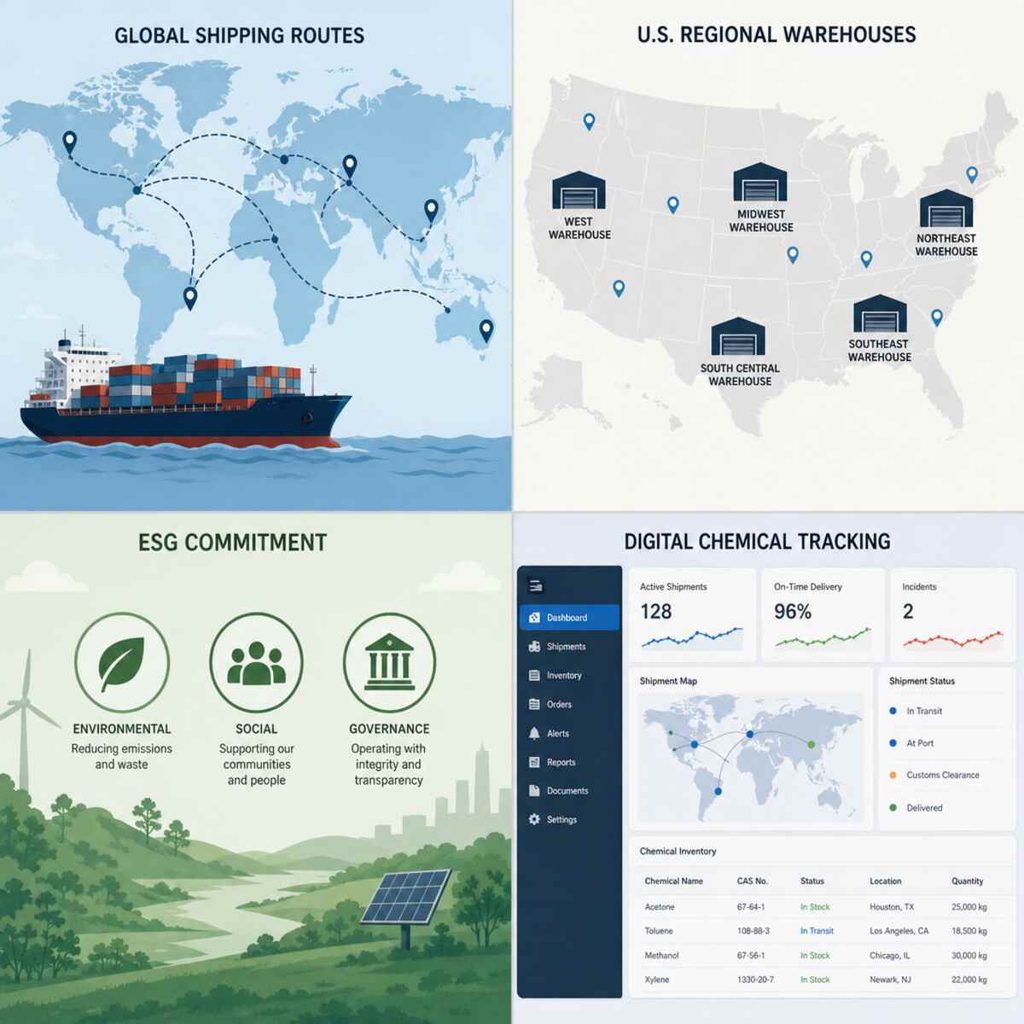
For US B2B buyers, regional sourcing can help with lead time planning and communication. It does not mean every product will be domestic or nearby. Industrial chemicals are still part of a global network. But it does mean buyers are asking better questions about origin, backup supply, regional warehousing, and how chemical manufacturers and distributors can support continuity.
Sustainability and ESG expectations
Sustainability is now part of many sourcing conversations, especially when customers, investors, or internal teams ask for better environmental information. This can include packaging reduction, responsible waste practices, lower-impact options where available, emissions awareness, supplier screening, or documentation that supports sustainability reporting.
The key is to stay practical. Not every chemical has a simple “greener” substitute. Not every process can change overnight. A useful supplier helps buyers ask realistic questions: Is there an alternative grade? Is packaging reusable or recyclable through approved channels? Can shipments be consolidated? Is there documentation that supports internal ESG review? OECD supply chain work also points to track-and-trace tools and environmental checks as ways companies can connect supply chain visibility with sustainability and compliance goals.
Regulatory compliance and documentation
Regulatory compliance is not a side task in chemical supply. It sits inside product selection, shipping, storage, labeling, employee safety, disposal, and customer requirements. EHS teams need accurate information, and procurement teams need suppliers who understand that documentation delays can hold up internal approvals.
For a buyer, compliance support may include access to SDS documents, product specifications when available, certificates or lot documentation when provided by the manufacturer, transportation classification details, and awareness of rules that may affect storage or handling. The supplier’s job is not to replace your legal, regulatory, or EHS professionals. The supplier’s job is to make the product information trail clearer, faster, and easier to manage.
Digitalization and track-and-trace
Digital tools are becoming more useful across chemical supply chains. Buyers increasingly expect better visibility into orders, inventory, shipment status, product documentation, and supplier performance. This is especially important when multiple departments touch the same purchase.
Track-and-trace practices can support recall readiness, chain-of-custody review, quality control, and sustainability reporting. They can also reduce the everyday friction of asking, “Where is the order?” or “Which lot did we receive?” Manufacturing and supply chain sources continue to point to digital tools, analytics, and AI as ways companies are improving visibility, forecasting, and supply chain decision-making.
Inventory strategies
Inventory planning has moved away from one extreme answer. Years ago, many companies chased very lean inventory because it reduced carrying costs. Then disruptions reminded everyone that too little inventory can shut down production. Now, many buyers are looking for a smarter middle ground.
That middle ground may include safety stock for critical materials, scheduled releases, consignment-style conversations where appropriate, supplier-managed planning discussions, or holding extra inventory only for high-risk items. The point is not to stockpile everything. The point is to know which chemicals deserve closer planning because they affect production, safety, customer commitments, or revenue.
Specialty versus commodity dynamics
Commodity chemicals and specialty chemicals behave differently in supply planning. Commodity materials are often purchased with a strong focus on price, volume, availability, and logistics. Specialty chemicals may require more attention to formulation, technical fit, quality history, manufacturer approval, and substitution risk.
Current specialty chemical commentary shows companies adjusting distribution strategy, investing in digital transformation, and responding to uneven demand with more disciplined supply chain decisions. For buyers, the practical takeaway is simple: do not source every chemical the same way. A solvent used broadly across operations may need a different purchasing strategy than a specialty additive that affects final product performance.
Industries served
Industrial chemicals touch more everyday products than most people realize. They support cleaning, coating, treating, blending, manufacturing, maintaining, testing, and processing work across a wide range of US industries. Because each industry uses chemicals differently, a good supplier starts by understanding the application, not just the product name.
We support B2B buyers across industries such as:
- Manufacturing and industrial processing: Chemicals for production support, cleaning, preparation, finishing, and maintenance applications.
- Food and beverage operations: Industrial and facility-support chemicals where appropriate documentation and handling practices matter.
- Water and wastewater treatment: Chemicals used in treatment processes, pH adjustment, cleaning, and system support.
- Paints, coatings, adhesives, and sealants: Solvents, additives, intermediates, and related materials used in formulation and production environments.
- Personal care and household products: Ingredients and processing materials where product grade, documentation, and consistency are important.
- Pharmaceutical and life science support: Materials for qualified industrial uses, facility support, and controlled purchasing environments.
- Oil, gas, and energy: Chemicals used in operations, maintenance, treatment, and processing workflows.
- Agriculture and specialty applications: Materials used in blending, treatment, and supporting production processes.
- Electronics and advanced manufacturing: High-attention sourcing environments where purity, documentation, and supplier discipline may be critical.
- Transportation, aerospace, and metalworking: Cleaning, surface preparation, corrosion control, lubrication support, and process chemicals.
This list is broad on purpose. Many buyers arrive with a specific need, while others are still defining the right product or approval path. Either way, the first step is to connect your application, documentation needs, packaging requirements, and timing expectations.
Products and supply categories
A homepage should make navigation easy. If you already know what you need, you should be able to request a quote quickly. If you are still comparing options, you should be able to start a conversation without needing a chemistry degree or a perfect specification sheet.
Industrial chemical supply often includes several product families. Availability depends on product, grade, manufacturer, package size, location, and regulatory requirements, so the best next step is always to confirm your exact need.
Common industrial chemical categories
- Solvents: Materials used in cleaning, blending, extraction, formulation, and surface preparation.
- Acids and bases: Chemicals used for pH adjustment, cleaning, processing, and treatment applications.
- Surfactants and detergents: Materials that help with wetting, cleaning, emulsifying, and dispersion.
- Glycols and alcohols: Chemicals used in heat transfer, formulation, cleaning, and process support.
- Salts and inorganic chemicals: Materials used across treatment, manufacturing, and processing applications.
- Additives and intermediates: Specialty materials that support performance, stability, processing, or formulation goals.
- Water treatment chemicals: Products used to support industrial, municipal, or facility water systems.
- Cleaning and maintenance chemicals: Materials for facility care, equipment cleaning, and process support.
- Custom or hard-to-source materials: Sourcing support for buyers who need a specific grade, manufacturer, or approval package.
The best way to use this list is as a starting point. If you are unsure whether a product fits your application, tell the supplier what you are trying to accomplish. A clear use case often leads to better questions, fewer wrong turns, and a cleaner quote process.
How we support procurement, operations, and EHS teams
A chemical purchase usually has more than one stakeholder. Procurement may own the supplier relationship and purchase order. Operations may own the production impact. EHS may own safety, storage, training, or reporting concerns. Finance may care about cash flow, inventory, and contract terms. Quality may need specifications, lot records, or consistency from order to order.
That is why a strong supplier should communicate in a way that helps everyone do their part. The goal is not to bury teams in paperwork. The goal is to make the right information available at the right moment.
Support for procurement teams
Procurement teams need responsive communication, competitive options, and supplier accountability. They also need enough context to compare more than price. A quote that looks cheaper may not be the best option if it creates longer lead times, limited documentation, unsuitable packaging, or hidden handling challenges.
Helpful procurement support includes:
- Clear product identification and grade confirmation
- Quote details that explain package size, lead time, and availability
- Alternate sourcing options when appropriate
- Coordination with approved chemical manufacturers where needed
- Contract, repeat order, or scheduled release conversations
- Communication about changes that may affect supply
Support for operations teams
Operations teams care about continuity. If a product is missing, late, or different from expectations, the result can be downtime, rework, schedule changes, or waste. Operations support starts with understanding how the chemical is used, how much is needed, and what happens if the order is delayed.
Useful support may include planning around production schedules, identifying critical-use materials, discussing packaging that fits storage and handling equipment, and helping create realistic reorder points. Small details matter. A drum, tote, bulk delivery, or smaller container format can change how smoothly a facility receives and uses the product.
Support for EHS and compliance teams
EHS teams need suppliers who take chemical information seriously. That includes SDS access, hazard communication, shipping classification details when applicable, labeling awareness, and prompt responses when documentation is requested. The best supplier relationships make it easier for EHS professionals to review materials before they arrive on site.
Compliance support should be careful and honest. No supplier should make unsupported claims or promise that a material fits every regulation without review. Instead, the supplier should help gather available documentation, clarify product identity, and support the internal review process your organization already uses.
Quality, safety, and compliance as daily habits
Trust in chemical supply is built through repeatable habits. It is built when the supplier confirms details, communicates clearly, handles documentation carefully, and treats safety as part of the order process. Big promises matter less than consistent follow-through.
Quality starts with product identity and expectation alignment. Before an order is placed, the buyer and supplier should be clear about the chemical name, grade, concentration, packaging, manufacturer preference, documentation needs, and intended use where relevant. This reduces the chance of mismatched products or approval delays.
Safety starts with respect for the material. Industrial chemicals may have handling, storage, shipping, or personal protective equipment considerations. A supplier should support safe decision-making by helping buyers access safety information, confirm packaging needs, and understand when special handling may apply.
Compliance starts with documentation and careful communication. Chemical regulations can affect how materials are shipped, stored, used, reported, and disposed of. Your internal compliance team makes the final determination, but a reliable supplier helps ensure product information is not scattered, vague, or missing when you need it.
Trust signals buyers should expect
- Clear SDS access when available
- Product specification support when provided by the manufacturer
- Lot, certificate, or quality documentation support when applicable
- Careful product and package confirmation before fulfillment
- Safety-aware communication about handling and shipping considerations
- Transparent updates when availability or timing changes
- Respect for internal EHS, quality, and procurement review processes
- No unsupported claims about performance, compliance, or suitability
That last point is important. A trustworthy supplier does not guess when the answer should be verified. If a detail needs confirmation, the supplier should say so and help find the answer.
Inventory strategies for a more flexible supply chain
Inventory is one of the hardest parts of chemical purchasing because every option has a tradeoff. Too much inventory can tie up cash, take up storage space, and create shelf-life or regulatory concerns. Too little inventory can leave production exposed. The right answer depends on the product, the plant, the supplier network, and the cost of running short.
A practical inventory strategy starts by sorting chemicals into groups. Some items are mission-critical and difficult to replace. Some are important but easy to source. Some are seasonal. Some have long lead times. Some require special storage. Once you group them this way, planning gets easier.
A simple inventory planning checklist
Use this checklist as a starting point with your supplier:
- Identify critical chemicals. Which materials would slow or stop production if unavailable?
- Review lead times. Which items have longer or less predictable replenishment cycles?
- Check storage limits. How much can you safely and legally store on site?
- Confirm shelf life or stability. Which materials should not sit too long?
- Map approved alternates. Which products or suppliers are already approved, and which need review?
- Set reorder triggers. What inventory level should start a new quote or order?
- Plan for demand changes. Are there seasonal peaks, customer projects, shutdowns, or maintenance periods coming up?
- Review documentation needs. Which products require specs, certificates, SDS review, or internal approvals before reorder?
This is the same idea a writing teacher would use when organizing a long paper: sort the pieces before you try to polish the final draft. When you sort chemicals by risk, lead time, and use case, the supply plan becomes much easier to manage.
Digital tools and clearer communication
Digitalization sounds technical, but the buyer benefit is simple: fewer blind spots. When order details, documents, shipment updates, and supplier communication are easier to find, teams spend less time hunting and more time making decisions. That matters when a plant manager, buyer, and EHS coordinator all need the same information for different reasons.
Good digital practices may include better order tracking, searchable product records, digital SDS access, inventory visibility, customer portals, automated reorder reminders, and clearer shipment updates. More advanced systems may use forecasting, analytics, or AI-enabled tools to spot risks earlier.
Still, digital tools should not replace human support. They should make human support better. If your order is delayed, you need more than a status code. You need a person who can explain what changed, what options exist, and what the next step should be.
Communication that helps buyers act
Strong supplier communication should answer these questions clearly:
- What product is being quoted or shipped?
- What grade, concentration, or package size applies?
- What documentation is available?
- What is the expected lead time?
- What could affect availability?
- Who should the buyer contact with questions?
- What happens if a product is unavailable?
- What information is needed to avoid delays?
Clear communication is not fancy. It is useful. And in chemical supply, useful is exactly what busy teams need.
Specialty and commodity chemical sourcing
Commodity and specialty chemical sourcing require different habits. A commodity product may have several available sources and be purchased mainly on volume, packaging, logistics, and timing. A specialty product may have fewer suitable alternatives and may require stricter approval before any change is made.
For commodity chemicals, buyers often benefit from pricing discipline, forecast sharing, and supplier reliability. For specialty chemicals, buyers often need deeper attention to product consistency, technical fit, documentation, and change control. Mixing up those approaches can cause problems. Treating a specialty material like a simple commodity can create performance risk. Treating every commodity like a custom specialty can slow purchasing down unnecessarily.
Practical sourcing guidance
- For commodity chemicals: Focus on availability, logistics, packaging, price structure, and backup sources.
- For specialty chemicals: Focus on performance requirements, approved manufacturers, specifications, documentation, and substitution risk.
- For regulated environments: Confirm documentation and internal approval needs before ordering.
- For new applications: Share the use case early so the supplier can ask better questions.
- For repeat orders: Track changes in lead time, package size, supplier source, and documentation.
A good supplier helps you choose the right sourcing lane. That saves time and reduces risk.
Company capabilities that support supply chain resilience
The strongest chemical supply relationships are built before there is an emergency. If the first serious conversation happens after a shortage begins, the options may already be limited. Buyers can protect themselves by working with suppliers who understand planning, documentation, and communication as part of the service.
Our capabilities are designed around that practical need. We support buyers who want a cleaner purchasing process, better visibility, and a supplier that can help connect product requirements with real-world fulfillment.
Capabilities that matter to B2B buyers
- Product sourcing support for industrial and specialty chemical requirements
- Supplier network coordination with chemical manufacturers and distribution partners
- Packaging flexibility discussions based on product availability and handling needs
- Repeat order planning for commonly purchased materials
- Critical material review to help identify higher-risk supply items
- Documentation coordination for SDS, specifications, and other available records
- Logistics communication for shipment planning and delivery expectations
- Responsive quoting for new, repeat, and hard-to-source requests
- Application-aware conversations that connect product selection with actual use
These capabilities are not meant to sound complicated. They are meant to make your work simpler. When you have one supplier helping connect sourcing, documentation, packaging, and timing, your internal team has fewer loose ends to manage.
A practical buying process
Buying industrial chemicals should be careful, but it should not feel mysterious. The best process is clear enough for a first-time buyer and detailed enough for an experienced procurement lead. Here is a simple step-by-step path.
How to get started
- Share the product need. Send the chemical name, grade, concentration, manufacturer preference, part number, or existing specification if you have it.
- Explain the application. A short use-case note helps confirm whether the request needs extra review.
- List packaging and quantity needs. Include drums, totes, bags, bulk, pallets, or smaller package requirements if known.
- Confirm documentation needs. Tell us if your team needs SDS, specifications, certificates, regulatory information, or internal approval materials.
- Review availability and lead time. We confirm what can be sourced, what needs verification, and what timing may look like.
- Approve the quote. Your procurement team reviews pricing, terms, product details, and delivery expectations.
- Coordinate fulfillment. We support order communication, shipment planning, and updates where available.
- Plan the next order. For repeat materials, we can discuss reorder timing, forecast needs, and risk points.
This process works because it starts with clarity. If you provide the right details early, the quote is stronger, the documentation path is cleaner, and the order is easier to manage.
Why buyers choose a stronger supplier relationship
A transactional supplier may work for a simple, low-risk purchase. But industrial chemical supply often affects production, safety, compliance, and customer commitments. That makes the relationship more important than it first appears.
A stronger supplier relationship gives your team a place to ask questions before small issues turn into delays. It also helps you build a purchasing rhythm. Instead of reacting to every order as a fresh emergency, you can review critical materials, forecast repeat needs, and prepare alternatives where they make sense.
Signs your chemical supply process needs attention
- Your team frequently rushes orders at the last minute.
- EHS review is slowed by missing or unclear documentation.
- Operations teams are unsure when critical materials will arrive.
- Procurement has limited visibility into approved alternatives.
- A single supplier or route creates too much risk.
- Inventory levels swing between excess stock and shortages.
- Specialty materials are sourced without enough technical or documentation review.
- Commodity chemicals are consuming too much administrative time.
If several of these sound familiar, the fix does not have to be dramatic. Start with your top ten most important chemicals. Review demand, lead time, documentation, storage, approved alternates, and supplier communication. That one exercise can reveal where your supply chain is strong and where it needs support.
Clear next steps for US B2B buyers
If you are in procurement, operations, or EHS, you do not need a perfect plan before you contact a supplier. You need a clear starting point. Send the product name, quantity, package size, delivery location, and any documentation needs you already know. If some details are missing, say that too. A good supplier can help you identify what needs to be confirmed.
Request a quote if you know what product you need and want pricing, availability, and lead time information.
Talk with a sourcing specialist if you are comparing options, looking for a hard-to-source material, or reviewing backup supply.
Start an inventory review if your facility wants to reduce shortages, improve reorder timing, or identify critical chemical risks.
Ask for documentation support if your EHS, quality, or procurement team needs SDS, product data, or available manufacturer records before approval.
Industrial chemical supply chains will keep changing. Resilience, nearshoring, sustainability, compliance, digital tracking, smarter inventory, and specialty-versus-commodity sourcing are not passing buzzwords. They are practical buying issues that affect cost, continuity, safety, and decision-making.
The right industrial chemical supplier helps you turn those trends into a workable plan. If your team is ready for clearer sourcing, stronger communication, and supply support built for modern B2B chemical purchasing, reach out today and start the conversation.
