



Before you start creating your own version, it’s crucial to understand what makes “Would You Rather” so popular. The game revolves around giving players two options and asking them to choose one. These choices are often humorous, tricky, or thought-provoking, making players think hard about their decisions. The fun lies in the discussion and reasoning behind each choice. To know more, check out AZURA77
The core appeal of “Would You Rather” lies in its simplicity and the depth it can reach. Players are often faced with choices that are designed to be difficult, prompting them to consider their values, preferences, and sometimes even fears. The game provides a platform for players to explore hypothetical scenarios that they might not encounter in real life, offering both entertainment and introspection.
“Would You Rather” is more than just a game; it’s a social experience. The choices presented often lead to lively discussions, debates, and sometimes hilarious justifications. This interaction fosters a sense of camaraderie among players, as they share their thoughts and learn more about each other’s perspectives. The game acts as a conversational catalyst, breaking down barriers and encouraging open dialogue.
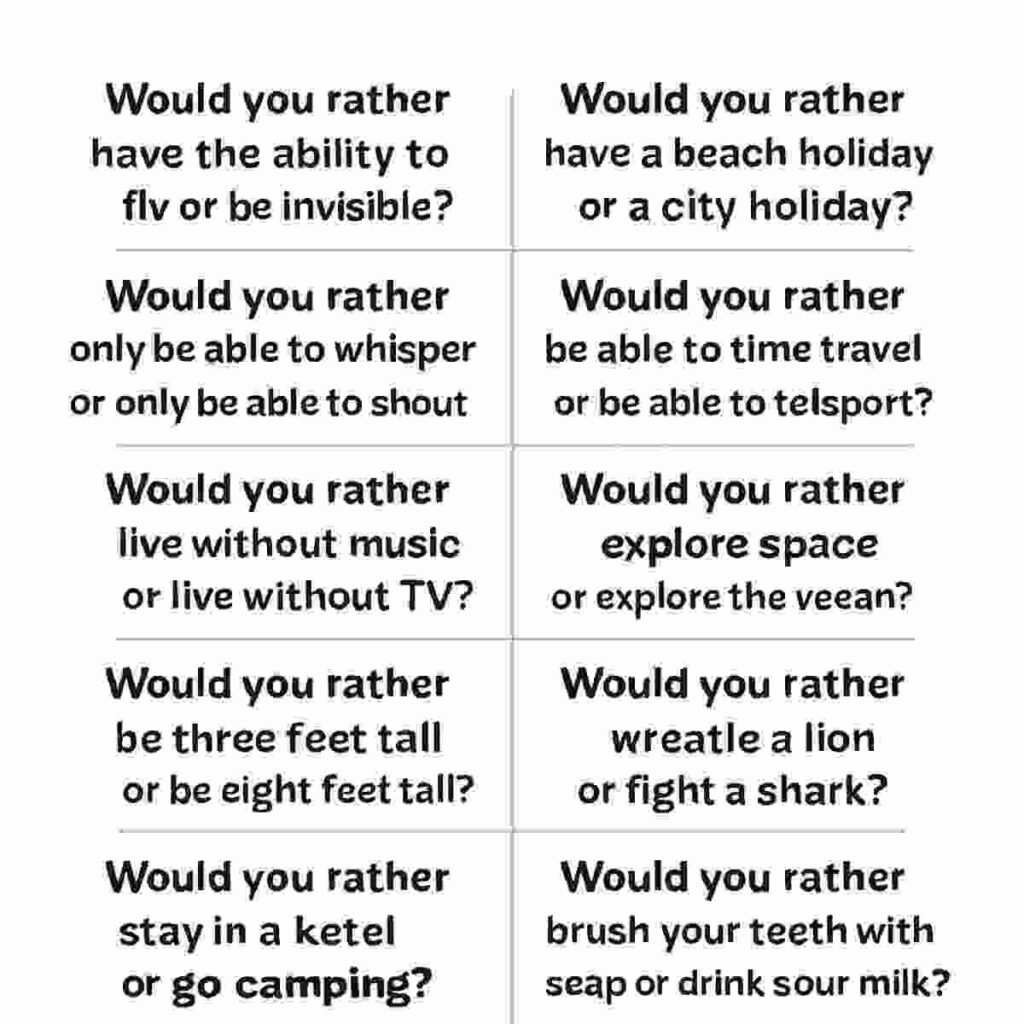
- Would you rather have the ability to fly or be invisible? This question taps into common childhood fantasies, making it relatable and engaging.
- Would you rather never be able to eat your favorite food again or only be able to eat your favorite food for the rest of your life? This question explores the balance between indulgence and variety, a dilemma many can relate to.
Step 2: Brainstorming Questions
The heart of any “Would You Rather” game is its questions. Start by brainstorming a list of questions. Think about your audience and what they might find intriguing or amusing. Here’s how you can get started:
Brainstorm Techniques
- Mind Mapping: Draw a map of related ideas and concepts. Start with a central theme, like “superpowers” or “food”, and branch out from there. Mind mapping allows you to visually organize your thoughts and explore connections between different ideas. This method can lead to unique and unexpected questions that capture the imagination.
- Random Word Generator: Use an online tool to generate random words and build questions around them. This technique can spark creativity by introducing elements you might not have considered. The randomness of the generated words can lead to quirky and unconventional questions that add variety to your game.
- Group Session: Get together with friends or colleagues and have a brainstorming session. More heads mean more ideas! Collaborative brainstorming encourages diverse perspectives and can lead to questions that appeal to a wider audience. It also makes the creation process more fun and engaging.
Tips for Crafting Questions
- Keep it balanced: Ensure both options are equally appealing or unappealing. Balanced questions challenge players to weigh their choices carefully, leading to more thoughtful discussions.
- Be specific: Specific scenarios create more vivid imagery and discussion. Detailed questions allow players to visualize the situation more clearly, enhancing their engagement and emotional response.
- Mix it up: Include a variety of topics such as travel, food, work, and hobbies. A diverse range of questions keeps the game dynamic and prevents it from becoming monotonous.
Step 3: Organizing Your Questions
Once you have a good list of questions, it’s time to organize them. You can categorize them by difficulty, topic, or even by the mood they create (funny, serious, etc.).
Creating Categories
- Easy: Simple choices that are light-hearted and quick to answer. These questions serve as an excellent introduction to the game, warming up players and setting a relaxed tone.
- Medium: More thought-provoking options that require some consideration. Medium-level questions challenge players to think deeper, often sparking more in-depth discussions and debates.
- Hard: Challenging scenarios that spark deep discussions. Hard questions delve into complex themes and moral dilemmas, pushing players to explore their beliefs and values.
Thematic Grouping
Organizing questions by themes can enhance the gaming experience. Themes such as “fantasy vs. reality,” “technology,” or “ethical dilemmas” provide structure to the game, allowing players to focus on specific areas of interest. This approach also makes it easier to tailor the game to different audiences.
Mood-Based Organization
Categorizing questions by mood can create a more immersive experience. Whether you want the game to be humorous, serious, or a mix of both, organizing questions by mood helps set the right atmosphere. This method allows you to guide the emotional tone of the game, ensuring it aligns with your desired outcome.
Step 4: Designing the Game
Now that you have your questions organized, decide how you want to present your game. You can keep it simple with a list on paper, or you can get creative with a digital version.
Game Formats
- Printable Cards: Design cards with each question and print them out for a physical game. Printable cards offer a tactile experience and can be easily shared in group settings. They also provide a tangible way to interact with the game, making it more engaging.
- Digital Presentation: Use PowerPoint or Google Slides to create a visual presentation. Digital presentations allow for dynamic and visually appealing displays of questions. You can incorporate animations, transitions, and multimedia elements to enhance the gaming experience.
- Online Game: Use platforms like Kahoot or Quizlet to create an interactive online version. Online games reach a broader audience and allow for real-time interaction. They are ideal for virtual gatherings and can be easily accessed by players from different locations.
Adding Visuals
Visuals can enhance the game experience. Consider adding images or icons next to your questions to make them more engaging. Visual elements capture attention and can add an extra layer of meaning to the questions. They also help break the monotony of text, making the game more visually appealing.
Personalization
Consider personalizing the game for specific groups or occasions. Customizing questions or themes to align with events, holidays, or personal interests makes the game feel more special and relevant. Personalization can also increase player investment and enjoyment.
Step 5: Playing the Game
You’re ready to play! Gather your friends, family, or colleagues and dive into your custom “Would You Rather” game.
How to Play
- Set the Rules: Decide if players will take turns or if everyone will answer each question. Establishing clear rules ensures the game runs smoothly and everyone knows how to participate.
- Discuss Answers: Encourage players to explain their choices and discuss different viewpoints. This open dialogue fosters understanding and can lead to surprising insights. It’s also a great way to learn more about each player’s personality and thought process.
- Keep Score (Optional): You can add a competitive element by keeping score of how many people choose each option. While optional, scoring can add excitement and motivate players to engage more deeply with the questions.
Creating a Welcoming Environment
Foster an inclusive and respectful atmosphere where all players feel comfortable sharing their thoughts. Encourage participants to listen actively and respect differing opinions. A welcoming environment enhances the gaming experience and encourages meaningful interactions.
Variations and Adaptations
Consider introducing variations to the traditional format to keep the game fresh. You could implement timed rounds, themed sessions, or special challenge questions. Adaptations ensure the game remains exciting and can cater to different player preferences.
Step 6: Taking It Online
For those looking to reach a wider audience, consider taking your game online. Here’s how you can do it:
Creating an Online Game
- Websites: Use website builders to create a dedicated page for your game. A dedicated website provides a centralized platform for hosting your game and can reach a global audience.
- Social Media: Post questions on your social media accounts and engage with followers. Social media platforms offer instant feedback and interaction, making them ideal for real-time engagement with a broad audience.
- Apps: If you’re tech-savvy, create an app for your “Would You Rather” game. An app allows for a more interactive and personalized gaming experience, offering features like user profiles, leaderboards, and customizable settings.
Engaging Your Audience
To maximize engagement, incorporate interactive elements like polls, quizzes, and live discussions. Encourage user-generated content, such as players submitting their own questions. Engaging your audience fosters a sense of community and increases the game’s appeal.
Leveraging Technology
Utilize technology to enhance the gaming experience. Features like virtual reality, augmented reality, or gamification elements can add depth and innovation to your online game. Leveraging technology keeps your game current and appealing to tech-savvy audiences.
Final Tips
Creating a “Would You Rather” game is all about creativity and fun. Here are some final tips to keep in mind:
- Test Your Questions: Play a few rounds with a small group to see which questions work best. Testing helps refine your questions and ensures they resonate with your intended audience.
- Stay Inclusive: Ensure your questions are appropriate for all audiences. Inclusivity broadens your game’s appeal and ensures it can be enjoyed by diverse groups.
- Have Fun: Remember, the goal is to have fun and spark interesting conversations. Enjoy the process of creating and playing your game, and let the joy of interaction take center stage.
Whether you’re using this game as a writing exercise, a team-building activity, or just a fun way to pass the time, the possibilities are endless. So go ahead, create your own “Would You Rather” game and get ready for some laughs and lively discussions! Enjoy the journey of creativity and connection through this simple yet engaging game.